

Tag Archives: Risk
What is risk appetite?
By Robert Wright /May 28,2024/

Risk is about tolerating the potential for losses. Understanding your risk appetite allows you to make well informed decisions about your money.
For some people, risk means excitement and opportunity. For others, it invokes feelings of fear and discomfort. We all experience a degree of risk in our everyday lives – whether it’s simply walking down the street or having investments in the share market. Everyone has a risk profile that defines their willingness to accept risk. It’s usually shaped by age, lifestyle and goals and is likely to change over time.
Risk is about tolerating the potential for losses, the ability to withstand market movements and the inability to predict what’s ahead[1]. In financial terms, risk is the chance that an outcome will differ from the expected outcome or return. It includes the possibility of losing some or all of your original investment[2]. Often you may not be aware of your risk appetite until you’re facing a potential loss, so loss aversion becomes a significant factor when making decisions related to risk.
What is risk appetite and risk tolerance?
Risk appetite and risk tolerance are used interchangeably but are different.
Risk appetite is a broad description of the amount of risk an investor is willing to accept to achieve their objectives. It’s a statement or series of statements that describes their attitude towards risk taking[3].
Risk tolerance is the practical application of risk appetite3 and considers the degree of variability in returns an investor is willing to bear.
As an investor, you should have a good understanding of your attitude towards risk. If you take on too much risk, you might panic and sell at a bad time. But if you don’t expose yourself to enough risk, you may be disappointed with your returns and potentially unable achieve your objectives.
How do I work out my risk appetite?
Think about how you might answer these questions:
- How much money do I have to invest?
- How much money am I willing to lose?
- How worried would I be if share markets fell dramatically?
- Am I planning to track your investments daily?
- Would I consider investing in different types of investments?
Your age, income and investment objectives all help determine your risk appetite.
Age: generally younger investors with a longer time horizon to invest are more willing to take greater risk with their money to earn higher potential returns. Older investors with a shorter investment timeframe may be more cautious as they’ll need their money to be more readily available and have less time to recover from a loss.
Income: people who earn more money and have a higher disposable income can typically afford to take greater risks with their investments.
Investment objectives: be clear about why you’re investing and when you think you’ll need to withdraw your money, as well as how long you need the money to last. Saving for a holiday or a deposit on a home is quite different from investing for your retirement.
Risk and Return
The relationship between risk and return underpins all financial decisions. The more risk an investor is willing to take, the greater the potential return. However, investors expect to be compensated for taking on this additional risk and should realise that taking on more risk doesn’t guarantee higher returns.
What type of investor are you?
- High: willing to risk losing more money for the possibility of better returns.
- Moderate: willing to endure short-term loss for the prospect of better long-term growth opportunities.
- Conservative: willing to accept lower returns for a higher degree of liquidity or stability.
Whatever your risk appetite, you should always consider both risk and return before making decisions about what to do with your money. Although shares and property are generally considered to be higher-risk investments, even more conservative investments like bonds can experience short-term losses. No investment is completely risk free.
This explains why smart investors typically have a diversified portfolio that includes several different types of investments.
Risk and Diversification
Don’t think that just because your friends invest in shares you should too. If you don’t have a lot to invest or you’ll want to access your money in a few years, shares may not be the right type of investment for you.
By understanding your risk appetite and being honest about what you want to achieve, you’re more likely to be comfortable with your investment decisions. A financial adviser can help you understand your risk appetite, as well as create a portfolio that suits you.
The simplest way to minimise investment risk is through diversification. A well diversified portfolio will usually include different asset classes, like shares, property, bonds and cash, with exposure across different industries, markets and countries. The idea is to reduce the correlation between the different types of investment and have a good balance of assets which move in different directions and at different times. So, if some of your assets perform poorly, others may be performing well, offsetting the poor performers.
Although diversification doesn’t guarantee you won’t suffer a loss, it’s an effective way to minimise risk and help investors realise their financial goals.
Make informed decisions
You should monitor both your risk appetite and your investment portfolio over time.
Your risk appetite is likely to change as you get older, and as your income or family situation changes.
Similarly, you should review your portfolio to ensure the risk level is still suited to your overall investment objectives. Financial markets are constantly changing, which means the underlying assets you’re invested in could change too.
If you’re a confident investor, you should check that it’s still on track to generate the level of return you want and importantly, at a comfortable level of risk. If you prefer to speak with a financial adviser, they too can help you undertake regular reviews and rebalance your portfolio, as necessary.
By understanding your risk appetite, you’re in a better position to make well informed and transparent financial decisions. It will help you identify opportunities to take on more risk where appropriate or see where you’re exposed to unnecessary risk and adjust accordingly. You’ll also avoid being caught up in the emotion of market activity, where panic can lead to a poorly timed and costly decision.
[1] Charles Schwab: How to Determine Your Risk Tolerance Level https://intelligent.schwab.com/public/intelligent/insights/blog/determine-your-risk-tolerance-level.html.
[2] Investopedia https://www.investopedia.com/terms/r/risk.asp.
[3] Australian Government Department of Finance: Defining Risk Appetite and Tolerance https://www.finance.gov.au/government/comcover/education/risk-appetite-and-tolerance.
Source: BT
Understanding market volatility
By Robert Wright /December 01,2023/
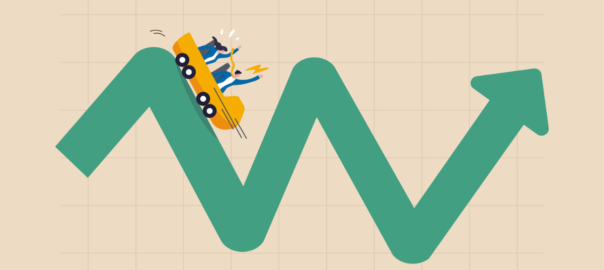
Many investors become concerned when volatility occurs in global financial markets – particularly about the impact on their superannuation and other investments. In times like these, it’s important to understand the causes of market movements and how to minimise your risk.
Why do markets move so much?
Markets are influenced by many things – industrial, economic, political and social factors can all have an impact. For example, consumer and business confidence affect spending and therefore company profits.
Global trade and production naturally affect economic growth. Poor political and fiscal decisions in some countries may lead to a flow on effect in other countries who are owed money. And of course, natural disasters can cause major damage to any economy with no warning.
During times of market volatility, it’s important to remember one of the fundamental principles of investing – markets move in cycles.
What is the effect of market volatility on super funds?
In times of market volatility your super balance may decline but it is important to remember that markets move in cycles. Volatility is a natural part of the economic cycle. Markets are influenced by a range of factors and are inherently unpredictable.
The Australian Securities & Investments Commission (ASIC) states that, ‘negative returns from time to time are not inconsistent with successful long term investment’. History demonstrates that over the long term, the general trend of share markets has been upward.
Don’t lose sight of the bigger picture
Super is a long term investment. Shares, which usually form a large part of most balanced super accounts, are also generally a long term investment. They are designed to provide capital growth over a period of five years or more. Think in years, not days.
The time frame for super may be 20 years or more, so short term volatility shouldn’t diminish the long term potential of your investments. Growth assets (such as shares) tend to fluctuate in the short term but have historically provided excellent returns for investors over the long term.
When share markets fall in value, it may be tempting to sell up. However, trying to time the market by selling now and buying back later is a risky strategy that rarely results in investors coming out ahead. By taking a long term view of investing, you can ride out any short term fluctuations in the market and take advantage of growth opportunities over the long term.
Diversification
Diversification is one of the most effective ways of managing volatility. It can help deliver smoother, more consistent results over time. Your investment may benefit by being spread across a variety of asset classes, including shares (domestic and global), fixed income, cash, direct and listed property and alternatives.
This diversification should help soften the effects of any share market falls as some asset classes often tend to do well whilst others are struggling. Also, spreading your assets around means you are less reliant on any one asset class at any particular time.
Understand your risk profile
All investments carry some risk. How much risk you’re willing to accept will be influenced by your financial situation, family considerations, time horizon and even your personality. If market volatility has caused you to reassess the way you feel about risk, it’s important that you see your financial adviser to discuss any necessary changes to your financial plan.
Understanding the implications of withdrawing
Before you withdraw from an investment you should understand all the implications, risks and costs involved.
Locking in your losses. If the value of your investment is falling, you are technically only making a loss on paper. A rise in prices could soon return your investment to profit without you doing anything. Selling your investment makes any losses real and irreversible.
Incurring capital gains tax (CGT). Make sure you know what your CGT position will be before selling any asset.
Losing the benefits of compounding. If you’re thinking about making a partial withdrawal from an investment, remember that it’s not just the withdrawal you lose but all future earnings and interest on that amount.
Key takeaways
Keep in mind that:
- Super is a long term investment designed to generate sufficient money so you can enjoy your retirement.
- Diversification is an important part of a long term super investment strategy. To create the lifestyle you want in retirement, it may be necessary to invest in growth assets like shares so that your returns stay ahead of tax and inflation.
- It may be beneficial to ride out the bad times in order to achieve long term growth.
Your financial plan was designed exclusively for you to suit your investment objectives and risk profile. It’s important to stay focused on your long term goals.
Source: Colonial First State
What is risk appetite?
By Robert Wright /February 18,2021/

For some people, risk means excitement and opportunity. For others, it invokes feelings of fear and discomfort. We all experience a degree of risk in our everyday lives – whether it’s simply walking down the street or having investments in the share market.
Everyone has a risk profile that defines their willingness to accept risk. It’s usually shaped by age, lifestyle and goals and is likely to change over time.
Risk is about tolerating the potential for losses, the ability to withstand market movements and the inability to predict what’s ahead. In financial terms, risk is the chance that an outcome will differ from the expected outcome or return.
It includes the possibility of losing some or all of your original investment. Often you may not be aware of your risk appetite until you’re facing a potential loss, so loss aversion becomes a significant factor when making decisions related to risk.
As an investor, you should have a good understanding of your attitude towards risk. If you take on too much risk, you might panic and sell at a bad time. But if you don’t expose yourself to enough risk, you may be disappointed with your returns and potentially unable achieve your objectives.
How do I work out my risk appetite?
Generally speaking, your age, income and investment objectives all help determine your risk appetite.
Age:
Generally younger investors with a longer time horizon to invest are more willing to take greater risk with their money to earn higher potential returns. Older investors with a shorter investment timeframe may be more cautious as they’ll need their money to be more readily available and have less time to recover from a loss.
Income:
People who earn more money and have a higher disposable income can typically afford to take greater risks with their investments.
Investment objectives:
Be clear about why you’re investing and when you think you’ll need to withdraw your money, as well as how long you need the money to last. Saving for a holiday or a deposit on a home is quite different from investing for your retirement.
Risk and Return
The relationship between risk and return underpins all financial decisions. The more risk an investor is willing to take, the greater the potential return. However, investors expect to be compensated for taking on this additional risk and should realise that taking on more risk doesn’t guarantee higher returns.
Whatever your risk appetite, you should always consider both risk and return before making decisions about what to do with your money. Although shares and property are generally considered to be higher-risk investments, even more conservative investments like bonds can experience short-term losses. No investment is completely risk free.
This explains why smart investors typically have a diversified portfolio that includes several different types of investments.
Risk and Diversification
Don’t think that just because your friends invest in shares you should too. If you don’t have a lot to invest or you’ll want to access your money in a few years, shares may not be the right type of investment for you.
By understanding your risk appetite and being honest about what you want to achieve, you’re more likely to be comfortable with your investment decisions.
The simplest way to minimise investment risk is through diversification. A well-diversified portfolio will usually include different asset classes, like shares, property, bonds and cash, with exposure across different industries, markets and countries.
The idea is to reduce the correlation between the different types of investment and have a good balance of assets which move in different directions and at different times. So, if some of your assets perform poorly, others may be performing well, offsetting the poor performers.
Although diversification doesn’t guarantee you won’t suffer a loss, it’s an effective way to minimise risk and help investors realise their financial goals.
Make informed decisions
You should monitor both your risk appetite and your investment portfolio over time. Your risk appetite is likely to change as you get older, and as your income or family situation changes.
Similarly, you should review your portfolio to ensure the risk level is still suited to your overall investment objectives. Financial markets are constantly changing, which means the underlying assets you’re invested in could change too.
If you’re a confident investor, you should check that it’s still on track to generate the level of return you want and importantly, at a comfortable level of risk. If you prefer to speak with a financial adviser, they too can help you undertake regular reviews and rebalance your portfolio, as necessary.
By understanding your risk appetite, you’re in a better position to make well-informed and transparent financial decisions. It will help you identify opportunities to take on more risk where appropriate or see where you’re exposed to unnecessary risk and adjust accordingly. You’ll also avoid being caught up in the emotion of market activity, where panic can lead to a poorly timed and costly decision.
Source: BT